×


Birralee Newsletter
May 5th 2026
Acknowledgements
We acknowledge the Wurundjeri, the traditional custodians of the land upon which we meet, and pay respect to their elders, past, present, and emerging, and in the spirit of reconciliation, welcome people from all nations.

At Birralee Primary School we value diversity and inclusion.

At Birralee Primary School we value diversity and inclusion.

Principal's Report
Welcome back
I was delighted to see everyone return after the holidays ready for a new term full of activities and learning. Cross country was a huge success last week – thank you Steph Tilley, our PE teacher, for organising such a well run series of races. Thank you also to the many parents who assisted as marshals along the course – we cannot run activities such as this without parent support. The Birralee course is quite tough with its short, sharp hills that are repeated throughout the race. Congratulations to all those who have made it through to the District Cross Country to be held shortly. I look forward to cheering you all on.
Year 7 Secondary School Preferences
Please remember to use the VicStudents app to lodge your secondary school preferences for 2027. There have been a few issues with the platform. If you are having trouble, please contact Pam in the office – our very own enrolment guru.
Musings
I have been a part of the Education Department for well over 50 years now, and although there have been many changes (no computers, photocopiers, mobile phones when I began), much remains the same. I have taught in a variety of multi-cultural schools, some largely mono-cultural, some big schools, some tiny school (39 students).
However, our students today are just as lovely, curious, caring, active, keen and funny as they were back in 1975 when I taught my first class at Altona East Primary School as a young 20 year old teacher. I am often asked what has changed – interestingly, I believe much remains the same, with technology, in my opinion the biggest difference which really does need to be managed well by parents. I also feel very protective towards children – they are vulnerable little beings! Understanding how children develop is incredibly important – they are children, not mini adults – it is vital that this is understood and acknowledged.
Once the development of the brain is understood, it is clear that adults must protect, guide and nurture children as they grow into the teenage years and then young adulthood. The fact that the prefrontal cortex does not fully develop until somewhere around the age of 25 means that we, the adults, must make decisions to protect our children – despite them insisting they know better!
The human brain develops gradually throughout childhood and adolescence, with one of the most important areas being the prefrontal cortex. This part of the brain is responsible for skills such as planning, decision-making, impulse control, and managing emotions. In primary school-aged children, the prefrontal cortex is still developing, which is why children may act impulsively, struggle to stay organised, or find it hard to regulate their reactions. These behaviours are a normal part of development, not misbehaviour.
With guidance, consistent routines, and supportive relationships, children strengthen these skills over time, building the foundation for independence, resilience, and thoughtful decision-making in later years.
One piece of advice I would give to parents is to remember, you are the parent, it is okay to say “No’. Children benefit most when parents provide warmth, guidance, and clear boundaries. While a friendly relationship is important, a parent’s role is not to be a peer or equal friend. Children need adults who can make decisions, set limits, and offer support, helping them feel safe, secure, and appropriately guided.
I am also often asked about those areas I believe are important, here are some that are vital:
Support Your Child’s Reading at Home
At Birralee, we are very proud of our students’ reading achievements. Our Spalding phonics program where students learn the sounds, rules and grammar required to read and write English are central to the wonderful results we achieve. To be able to read is a fundamental skill that all children need to master.
Reading is one of the most important skills your child will develop in primary school, and support at home makes a significant difference. Establishing a regular reading routine, just 20-30 minutes a day, can greatly improve fluency, comprehension, and confidence. Parents who have attended school tours will know that I talk about the importance of a minimum of 20 minutes reading practice each day, leading to progress. Practice should not ever be in one block (*see Ebbinghaus Forgetting Curve below) at the weekend – daily practice is vital. Encourage your child to read a variety of materials, including storybooks, comics, recipes, and even signs or instructions in everyday life.
When listening to your child read, focus not only on accuracy but also on understanding. Ask simple questions like “What do you think will happen next?” or “Why did the character do that?” to build comprehension skills. If your child makes mistakes, gently guide them rather than correcting every word immediately.
It is also valuable for children to see adults reading. Does your child see you reading? Is it seen as something important in your family? Modelling reading behaviour shows that it is a meaningful and enjoyable activity, not just a school task. Visiting local libraries and allowing children to choose their own books can further build enthusiasm.
Above all, keep reading positive and pressure-free. Celebrating effort rather than perfection helps foster a lifelong love of reading.
*The Ebbinghaus forgetting curve theory, developed by Hermann Ebbinghaus in 1885, demonstrates that memory retention declines exponentially over time, with the steepest decline occurring shortly after learning. Without reinforcement, nearly 70%of new information is forgotten within 24 hours. Key ways to counter this include spaced repetition, active recall, and making information meaningful.
Building Positive Homework Habits
Homework in primary school is designed to reinforce learning and build responsibility. It is not meant to fill every spare minute after school, but rather to set routines and revise schoolwork. (see below The Value of Downtime) Establishing consistent homework habits early helps children develop organisation and independence. A regular time and quiet, distraction-free space for homework can make a big difference in focus and productivity.
Parents play an important role in guiding, but not doing, the work. Encourage your child to attempt tasks independently first, offering support when needed. Asking guiding questions such as “What is the question asking?” or “How did you solve a similar problem at school?” helps develop problem-solving skills.
Break tasks into manageable chunks, especially if your child feels overwhelmed. Short breaks can also help maintain concentration. It’s important to balance homework with play, physical activity, and rest, as these are all essential for healthy development.
If homework regularly causes stress or confusion, communicate with your child’s teacher. Homework should support learning, not create anxiety. With the right balance and encouragement, homework can become a positive and productive routine.
The Importance of Social and Emotional Learning
While academic learning is important, social and emotional skills are equally vital for your child’s overall development. I make this point also at the end of school tours, we do not want students who are only good academically, we need our students to be well-rounded, compassionate individuals. Skills such as managing emotions, building friendships, showing empathy, and resolving conflicts help children thrive both in and out of the classroom.
Parents can support this learning by talking openly about emotions at home. Encourage your child to express how they feel and help them label those emotions. Simple conversations like “What made you feel happy today?” or “How did you handle that situation?” can build awareness and reflection.
Modelling positive behaviour is also key. Children learn by observing how adults manage stress, communicate, and treat others. Demonstrating patience, kindness, and problem-solving provides powerful examples. "Children have never been very good at listening to their elders, but they have never failed to imitate them." - James Baldwin
Encourage opportunities for social interaction through playdates, group activities, or team sports. These experiences help children practise cooperation and resilience.
Developing strong social and emotional skills not only supports academic success but also builds confidence and wellbeing that lasts a lifetime.
Encouraging Healthy Screen Time Habits
Never has it been more important to stay on top of technology. Modern technology is a double-edged sword – it has the possibility of being incredibly helpful while at the same time doing great harm. Technology is now an integral part of modern life, but managing screen time is important for children’s health and development. Setting clear and consistent boundaries helps children develop a balanced relationship with screens.
Aim to create “screen-free” times, such as during meals (strictly no screens at the table) or before bedtime, to encourage family interaction and better sleep routines. Encourage alternative activities like outdoor play, reading, creative arts, or board games to ensure a healthy mix of experiences.
When children do use screens, focus on quality over quantity. Educational programs, interactive learning apps, and creative tools can be beneficial when used appropriately. Watching or engaging with content together also provides opportunities for discussion and shared learning.
It’s equally important to model healthy screen habits as adults. Children are more likely to follow guidelines when they see them practised at home. By setting boundaries and promoting balance, parents can help children enjoy the benefits of technology while supporting their physical, social, and emotional wellbeing.
However, as parents, you have the responsibility to oversee and enforce rules with regard to technology use in your home. Do not allow screens in bedrooms – keep them in a family space.
The Importance of Sleep and Healthy Bedtime Routines
I am frequently astounded at the late bedtimes many of our students have – many go to bed at around the same time as I do, or even well after! Children require much more sleep than adults.
Sleep plays a critical role in children’s learning, behaviour, and overall wellbeing. For primary school-aged children, most experts recommend between 9–11 hours of sleep each night. This means if your child is to be out of bed at 7:30 am to have breakfast, wash, dress and get ready to go to school, our junior students must be in bed around 7:30pm – time for a story and lights out at 8:00 pm. Without enough rest, children struggle with concentration, emotional regulation, and memory—key factors for success at school.
Establishing a consistent bedtime routine helps signal to the body that it is time to wind down. A predictable sequence—such as a bath or shower, brushing teeth, reading a book, and quiet conversation—can make bedtime smoother and more positive. Try to keep bedtimes and wake-up times consistent, even on weekends, to support healthy sleep patterns.
Reducing screen use at least an hour before bed is also important, as the light from devices can interfere with the body’s natural sleep rhythms. Instead, encourage calming activities like reading or drawing.
A well-rested child is more alert, better able to manage challenges, and more engaged in learning. Prioritising sleep is one of the simplest yet most powerful ways to support your child’s success at school and beyond.
When we sleep, the body is far from inactive—it is carrying out essential repair and maintenance work. The brain processes and organises information from the day, strengthening memories and helping learning to “stick.” It also clears waste products that build up during waking hours.
The body releases growth hormone, which supports tissue repair, muscle growth, and overall development in children. The immune system becomes more active, helping to fight illness and strengthen the body’s defences. Heart rate, breathing, and body temperature all adjust to conserve energy and promote recovery.
Different stages of sleep cycle throughout the night, including deep sleep (important for physical restoration) and REM sleep (important for dreaming, learning, and emotional processing). Together, these processes help children wake up refreshed, focused, and ready to learn and grow.
The Value of Downtime and Unstructured Play
It saddens me when I ask children, “Did you have a great holiday?” or “What did you do at the weekend?” only to be met with answers such as “I didn’t have a holiday, my parents made me study every day.” This is not an infrequent response from students at Birralee. Children need to be allowed to be children; childhood only comes once.
In today’s busy world, it can be tempting to fill children’s time with extra study, tutoring, and structured activities. However, downtime is not wasted time—it is essential for healthy development. After a full day at school, children benefit from opportunities to relax, recharge, and engage in activities they choose themselves.
Unstructured free time allows children to explore their interests, use their imagination, and develop creativity. Whether it’s building, drawing, playing outside, or simply daydreaming*, these moments help foster independence and problem-solving skills.
Over-scheduling or adding excessive academic work at home can lead to stress, fatigue, and reduced motivation. Children need balance to stay engaged and positive about learning. Homework should reinforce school learning, but it should not come at the expense of rest, family time, and play.
Encouraging a healthy balance between school responsibilities and free time supports not only academic success but also emotional wellbeing. Giving children space to “just be” helps them grow into curious, confident, and resilient individuals.
*Scientific research suggests that frequent daydreaming is often a sign of a highly efficient and intelligent brain. While it has traditionally been viewed as a sign of inattention, recent studies indicate that people with higher intellectual and creative abilities tend to have more "spare capacity," allowing their minds to wander without neglecting the task at hand.

Ashley Ryan
PRINCIPAL

Dates to Remember
Please take note of our upcoming events.
Check back regularly for updates.
- Division CrossCountry
Date: June 01, 2026
Time: All Day
- Year 4 Camp
Date: June 03, 2026
Time: All Day
- King’s Birthday Public Holiday
Date: June 08, 2026
Time: All Day
- Curriculum Day (no students at school)
Date: June 09, 2026
Time: All Day
- Assembly 2:40pm
Date: June 12, 2026
Time: All Day
- School Council
Date: June 15, 2026
Time: All Day
- Starry Night with the Astronomical Society of Victoria
Date: June 18, 2026
Time: All Day
- End of Term 2 (2:30pm dismissal)
Date: June 26, 2026
Time: All Day
- Start of Term 3
Date: July 13, 2026
Time: All Day
- Year 6 Performance
Date: September 07, 2026
Time: All Day
- Year 6 Performance
Date: September 08, 2026
Time: All Day

Sport Update
Term Highlights and What’s Ahead - Last term was an incredibly busy period for Birralee school sport, with excellent participation and achievement across a wide range of events.
It was particularly pleasing to see so many students represent the school at district, division, regional, and state levels in swimming.
At the regional level, our team showed great determination and adaptability. Due to holiday absences, several students stepped up to fill events, with special recognition to Yunyao 6RD and Gabby 6H for embracing the challenge of competing in a new event on short notice and achieving an impressive third-place finish alongside Melissa 5H and Olivia 6RD.
We also congratulate Denzel 6A, Kingsley 6A, Olivia 6RD, and Melissa 5H for their strong efforts in individual events at the regional championships.
A special mention to Melissa 5H, who delivered an outstanding performance at the state swimming carnival. She placed second in freestyle with a time of 30.27 seconds, narrowly missing first place by just 0.03 seconds, and went on to secure first place in backstroke with a time of 34.55 seconds, setting a new SSV record. Well done Melissa, we are so proud!
Our annual House Athletics Carnival was another major highlight of the term. The day was a vibrant day of house colour, perfect weather and participation, and it would not have been possible without the generous assistance of our 30+ parent helpers. Their contribution played a vital role in the success of the event.
The House Cross Country event was equally impressive. Students showed resilience and commitment as they tackled what was a particularly demanding course. It was fantastic to see so many students pushing themselves and striving to do their best. Team selections will be communicated via Compass event, and ribbon winners will be announced at assembly on Friday 1 May. Thank you again to our parent helpers for their continued support.
Looking ahead, the District Cross Country event will take place on the 18th of May. We are also excited for the upcoming Confident Girls Foundation Gala Day, which will provide an engaging and supportive opportunity for students to participate in netball and encourage greater involvement of girls in sport.
We are extremely proud of the effort, enthusiasm, and sportsmanship displayed by all students and look forward to another exciting
term of sport ahead.
Stephanie Tilley
Physical Education

PFA News
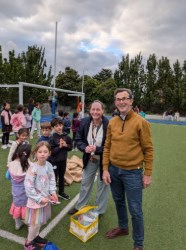
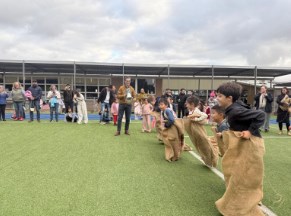
Family Fun Night - We ended term 1 with such a lovely time together at Family Fun Night (FFN). We were lucky and thankful for great weather that evening, and all the races went ahead. Thanks Mr Ryan, Ms Bamford and all our wonderful volunteers who made it happen!
Easter Raffle
Congratulations to our 5x winners to our raffle : Willa M, Tobias K, Evan T, Maya N, Sarah N! Hope you enjoyed all the easter goodies!Mother’s Day Stall
Back for a second year by popular demand, we will have a mother’s day stall for students to buy something special for their special someone on Friday 8 May. Please keep an eye out on Compass for details!
Next PFA Meeting - Monday 25 May at 7pm at Pancake Parlour - RSVP via email!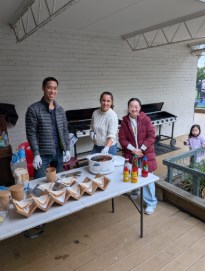
Vera Kok
PFA President
pfabirralee@gmail.com

Canteen
Lunch orders are available for lunch (12:50pm). Orders can be placed in advance and need to be in by 9:00am for same day processing. To place an order download the Qkr! App.
Click here for instructions on how to download and use Qkr!

Extracurricular Activities
We have various tutors and organisations who provide private tuition and programs before, during or after school. New programs are advertised via flyers or in the community news section of the newsletter. Please contact the event organiser to enrol your child.

Community News